
Quick answer
A calisthenics ab workout should train controlled trunk movement, resistance to extension, and side support. Use the beginner floor session to learn those tasks, then progress to the intermediate session when you can keep your pelvis and ribs controlled. Two focused sessions a week are a practical start; daily exhausting circuits are unnecessary.
This is also a calisthenics core workout: the goal is broader than doing as many crunches as possible. Stronger abs do not guarantee a visible six-pack, and you cannot select where body fat comes off by choosing an exercise. Judge the plan by better control, more repeatable work, and harder variations that still look deliberate.
Calisthenics ab workout: the sessions
Beginner (no equipment / bar only): floor only. Intermediate: a secure pull-up bar plus floor space. For timed holds, RIR is a quality cue rather than a literal rep count: stop several seconds before you expect your position to fail.
Spend five minutes on easy general movement, then five to ten minutes rehearsing easier versions of the session movements. The table begins after that preparation. Put the demanding strength work first, and keep the entire session within sixty minutes. If time is tight, reduce accessory work before cutting every rest period short.
| Exercise | Sets | Reps / hold | Rest | RIR |
|---|---|---|---|---|
| Crunch | 3 | 8–15 | 90–120 s | 2–3 |
| Side Plank | 2 / side | 10–25 s | 60–90 s | Stop before form breaks |
| Dead Bug | 1 | 6–10 / side | 60–90 s | 2–3 |
| Plank | 1 | 15–30 s | 60–90 s | Stop before form breaks |
| Glute Bridge | 2 | 10–15 | 60–90 s | 3 |
| Exercise | Sets | Reps / hold | Rest | RIR |
|---|---|---|---|---|
| Hanging Knee Raise | 3 | 6–12 | 2–3 min | 2–3 |
| Side Plank | 2 / side | 20–35 s | 60–90 s | Stop before form breaks |
| Hollow Body Hold | 1 | 15–30 s | 60–90 s | Stop before form breaks |
| Reverse Crunch With Hip Lift | 1 | 8–12 | 90 s | 2–3 |
| Single-Leg Glute Bridge | 2 / side | 8–12 | 60–90 s | 3 |
RIR means repetitions in reserve. Choose the table that matches your current control; do not complete both sessions back to back. Rest is between sets, and ranges are targets rather than a reason to force poor repetitions.
Why these exercises
Crunches provide a straightforward trunk-curling movement. Bring your ribs toward your pelvis without yanking your head forward. A short controlled range is enough; sitting all the way up changes the task and is not required. Stop the set while you could still perform two or three repetitions with the same tempo and the same amount of trunk movement.
Dead bugs teach you to move your limbs while keeping the trunk position steady. Begin with shorter reaches and make the lever longer only when your back position stays controlled. Do not treat speed as progress. Side planks add a lateral task, and a bent-knee version is a valid starting point when the straight-leg hold is too demanding.
Planks and hollow holds ask you to resist extension rather than repeatedly curl. Choose a lever you can maintain while breathing. A brief hold with a consistent position beats a long timer spent sagging or arching. The bridge supplies hip-extension work alongside the abdominal exercises, so the entire session is not a collection of nearly identical trunk curls.
Intermediate hanging knee raises introduce a bar and a grip demand. Start from stillness, raise your knees without swinging, and add a small pelvic curl when you control it. If your hands give out before your abs work, keep a floor movement as your main exercise. Hanging is an option for progression, not a prerequisite for effective core training.
How to progress
For extension control, progress from a short-reach dead bug to a longer reach, then a tucked hollow hold and a longer hollow hold. For curling, move from a controlled crunch to a reverse crunch and then hanging knee raises when you have a bar. For side support, move from bent knees to straight legs before adding time.
Each table contains five main abdominal sets plus two side-plank sets per side. Repeating it twice gives ten main abdominal sets and four lateral sets per side. Treat that as a practical core workload rather than claiming every exercise trains every core muscle equally. Bridge sets belong to your hip-extension budget, not your ab total.
Use a repetition range instead of a fixed number you must hit at any cost. If your target is six to twelve, begin with a variation that allows at least six controlled reps while leaving two or three in reserve. Add a rep to one or more sets over time. When every set reaches twelve with the same technique, move one rung harder and start lower in the range.
Aim toward ten to eighteen hard sets per priority muscle each week only when you can recover from them. About four can be enough to begin making progress, and five to ten is an efficient starting range. Eleven to eighteen can add stimulus, but returns diminish near twenty. Count indirect work as roughly half a set: push-ups contribute to triceps, and rows or pull-ups contribute to biceps.
Place your sessions on two repeatable days, such as Monday and Thursday. Going from once to twice a week is a useful first change; adding a third or fourth day is not automatically better. Start with less work if the full table is too much: use two sets for the main exercises and keep the supporting movements easy. Build toward the listed amount rather than forcing it on day one.
Every three or four weeks, take a lighter week with the same exercises, easier variations, and about twenty percent fewer repetitions. Resume from a workload you can repeat. If performance drops across several sessions, review your total weekly training before adding more. A log should record the variation, repetitions, range, and estimated effort, not just whether you completed the workout.
Common mistakes
- Swinging the legs through hanging raises. Let the body settle between repetitions and reduce the range if momentum takes over. More height is not automatically more abdominal work.
- Pulling on the head during crunches. Keep your hands light and make the movement at the trunk instead of using your arms to drag your neck forward.
- Treating a broken hold as extra training time. Stop when your hips drop, your ribs flare, or you cannot maintain the intended shape; record only controlled seconds.
- Assuming harder core work directly removes belly fat. Training can strengthen and build the muscles, but it cannot determine where your body loses fat.
- Adding these sessions after every workout without counting existing core work. L-sits, demanding holds, and other direct trunk exercises belong in the same weekly budget.
More exercises
Browse popular options from the same muscle group, including floor, bar, parallel-bar, and ring movements. The catalog also includes mobility and stretching; use those for preparation, not as replacements for hard strength sets.
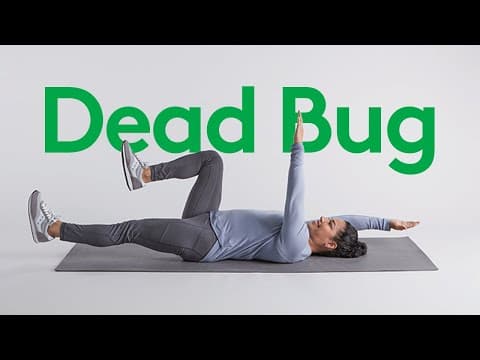
Dead Bug
Targets: Abdominals
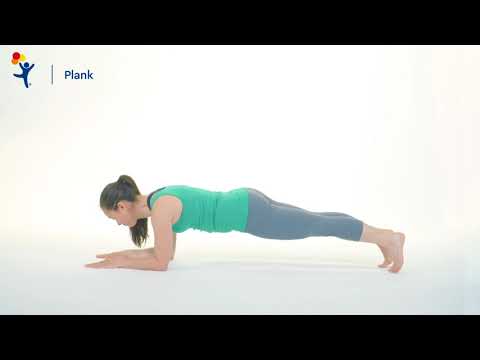
Plank
Targets: Abdominals
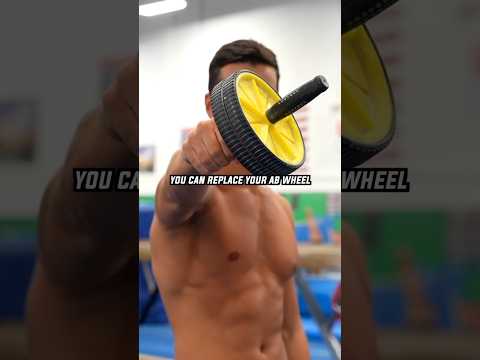
Ab Rollout - Rings
Targets: Abdominals
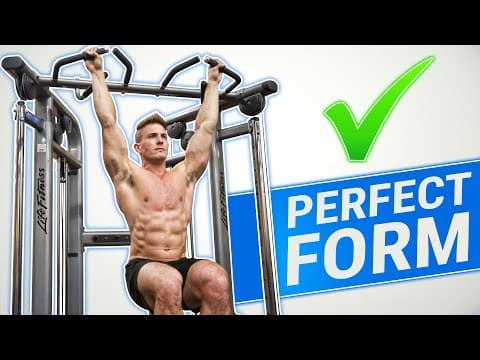
Hanging Knee Raise
Targets: Abdominals
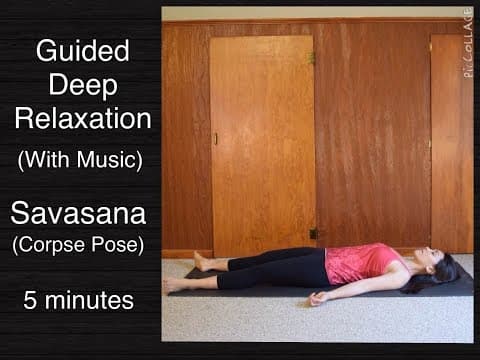
Savasana
Targets: Core
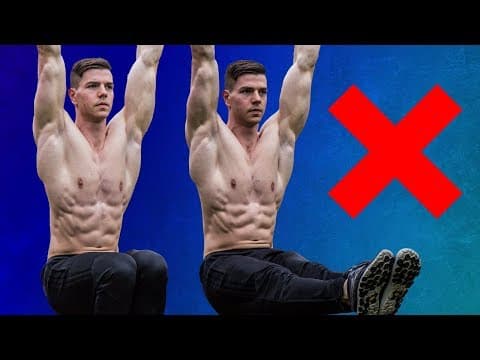
Leg Raise (Hanging, Straight)
Targets: Abdominals
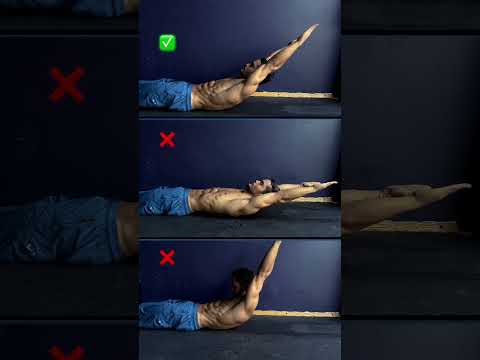
Hollow Body Hold
Targets: Abdominals
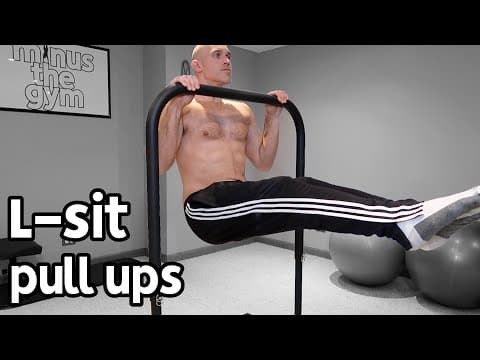
Pull-Up (L-Sit)
Targets: Lats, Abdominals
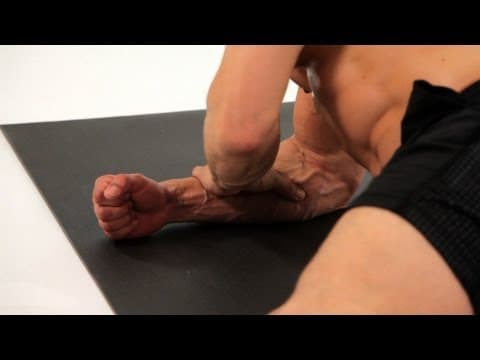
Side Plank
Targets: Obliques
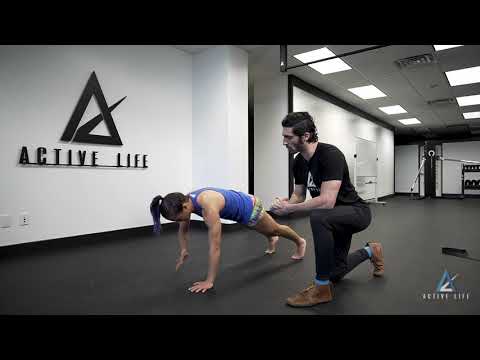
Plank (Shoulder Tap)
Targets: Abdominals, Shoulders
Frequently asked questions
Can you build bigger abs with calisthenics?
Yes. Controlled repetitions and progressively harder holds can challenge the abdominal muscles. Visible definition also depends on body fat and individual anatomy, so do not use a promised six-pack date as the measure of success. Track the movement quality and progression you can actually control.
Do I need a pull-up bar for an ab workout?
No. The beginner session is entirely on the floor. The intermediate table uses hanging knee raises, but you can replace them with controlled reverse crunches for the same number of sets. Choose the floor option when grip or bar access is the main obstacle.
How is this different from a core workout?
Abs are part of the core. This plan includes trunk curling, extension control, and side support, so it covers several core tasks rather than only crunches. The terms overlap in everyday use; the actual movements in your session matter more than the label.
How many times a week should I do this workout?
Start with twice a week, with a rest day between sessions. Include the same muscles trained in your other workouts when counting volume. Two sessions that fit your actual schedule are more useful than planning six days and abandoning the plan after the first week.
Should every set reach failure?
No. Stop most sets with two or three clean repetitions left. Training to failure is not required for strength progress and adds recovery cost. For timed holds or controlled negatives, use loss of position or descent control as the limit rather than forcing an arbitrary number.
How long should a session take?
Keep the session within sixty minutes, including preparation. Take two to five minutes between hard strength sets and sixty to ninety seconds for lighter accessories. If the session runs long, remove a supporting set or reduce the starting workload instead of rushing every rest period.
What should I do if I miss a session?
Resume at the next sensible opportunity rather than cramming two full workouts together. Keep a manageable two-session rhythm over the following week. During the first twenty-eight days, making the routine easy to repeat matters more than a perfect calendar or a dramatic jump in volume.
Track your workout in Fitloop
Fitloop is free. Record your chosen variations, sets, and repetitions so you can repeat a productive session and see when the next progression is appropriate.